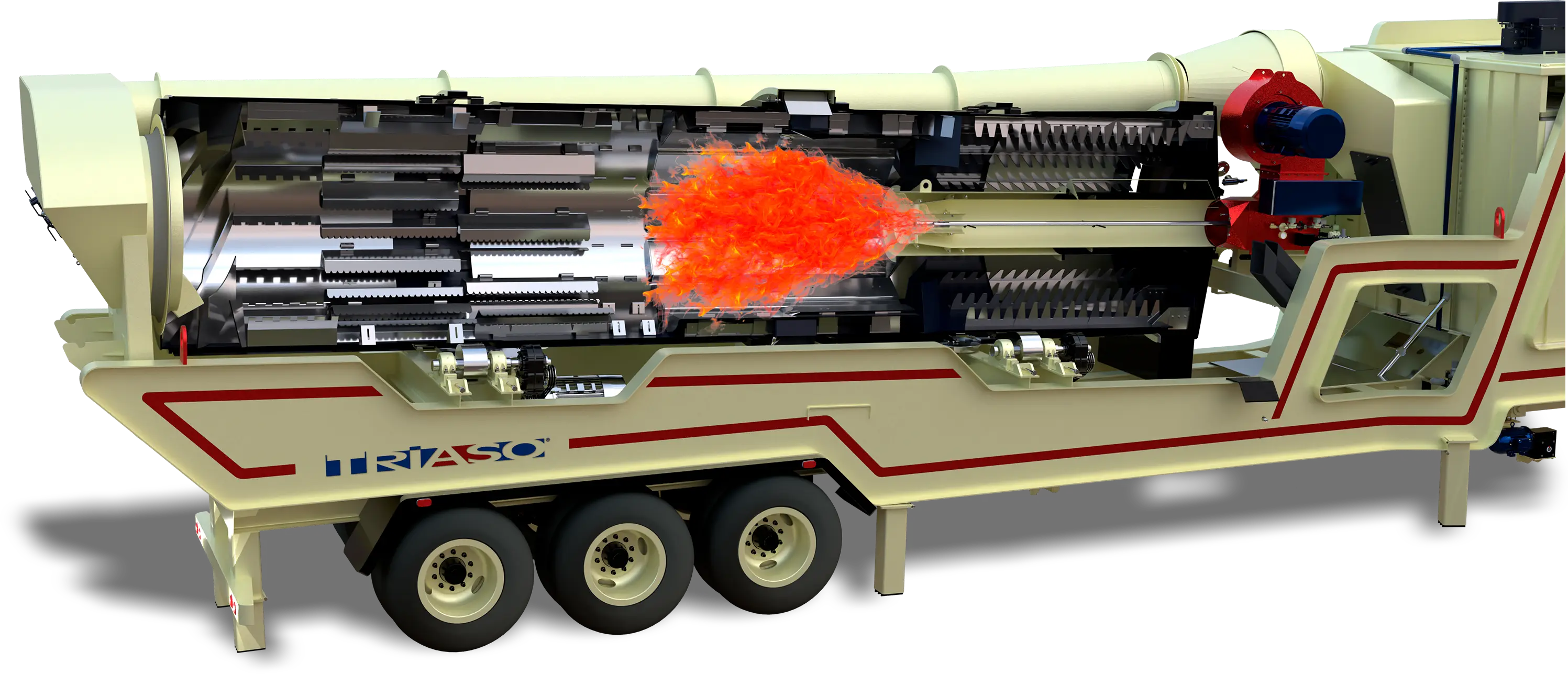
Cheap options may seem attractive at first. However, in many cases—and in fact, in most—fuel consumption ends up negating the savings obtained from the purchase within months. Fuel is the main input for operating the equipment. Therefore, a plant with higher consumption will generate much higher operating costs over time.
Preheater
Preheaters are used to reduce the viscosity of fuels. In Mexico, diesel and gas are generally not used for combustion in aggregate drying; alternative fuels are used because they can be economical. However, these alternative fuels are very viscous. What happens when an alternative fuel is atomized without preheating? Fuel atomization is inefficient due to its high viscosity. Unburned microdroplets represent a significant waste of fuel. Poorly atomized microdroplets form and do not burn properly. These microdroplets contaminate the mixture and produce polluting fumes. This contamination significantly reduces the pavement's lifespan. The residual gases are highly polluting and very visible. This leads to higher fuel consumption because the fuel is not fully utilized, requiring more fuel to dry the aggregates. The preheater allows for complete atomization of these fuels. Preheaters are an essential component in the operation of an asphalt plant, which is why we include them in all our plants at no extra cost.
Plasma-assisted burner
Plasma assistance allows for greater fuel efficiency. For greater atomization, fuel particles are ionized, forming molecular combustion. Plasma assistance improves fuel combustion efficiency. It allows for faster and more stable ignition, even with heavy or high-viscosity fuels. It reduces smoke formation and pollutant emissions.
Sealed drum
The complete sealing of cold air inlets on the mixing drum reduces fuel consumption. Cold air inlets decrease the internal efficiency of the burner inside the mixing drum, requiring more fuel to maintain the ideal internal temperature for drying the aggregates. What happens when all cold air inlets are sealed? Our drums have no cold air inlets; they are completely sealed with EPDM. No air escapes from any part of the mixing drum. Therefore, the burner's efficiency is retained within the drum and fully utilized, thus reducing fuel consumption. Thanks to this, fuel consumption for drying the aggregates is low.
Total air burner
Total air burners supply all the air entering the drum. Our burners are total air burners; there are no secondary air inlets, making them completely efficient. They regulate 100% of the air for combustion without relying on the drum's extraction system. This ensures complete combustion and full utilization of the fuel, with no heat loss. There are no cold air inlets; the burner is total air. An additional advantage is that it generates little NOx (nitrogen oxides). This occurs because there is no excess oxygen inside the drum.
Sail blade design
Efficient Design of Vane Blades Inside the Drum The vane blades inside the drum must be designed to efficiently dry the aggregates. This is one of the most important factors for the drum's energy efficiency and directly influences aggregate drying. Poor Vane Blade Design A poor vane design reduces the efficiency of drying the aggregates, generating a higher demand on the burner and requiring higher fuel consumption. Good Vane Blade Design A good design allows for the conservation of energy within the drum and its utilization for drying. Vane Design for Each Section Inside the Drum At Triaso, we manufacture our mixing drums with vanes specifically designed for each section of the drum.