Triaso® Baghouses
Triaso® baghouses are designed for efficient dust collection and air quality control in industrial applications. Engineered for maximum filtration efficiency, they capture fine particulates and ensure compliance with environmental regulations while enhancing workplace safety. Designed for asphalt plants and aggregate processing, these self-contained and integrated systems offer durable, high-performance air filtration. With advanced cleaning mechanisms and high air-to-cloth ratios, Triaso® baghouses improve mix performance by enabling the controlled reincorporation of fine particles into the mix and support sustainable operation by reducing airborne dust and emissions.
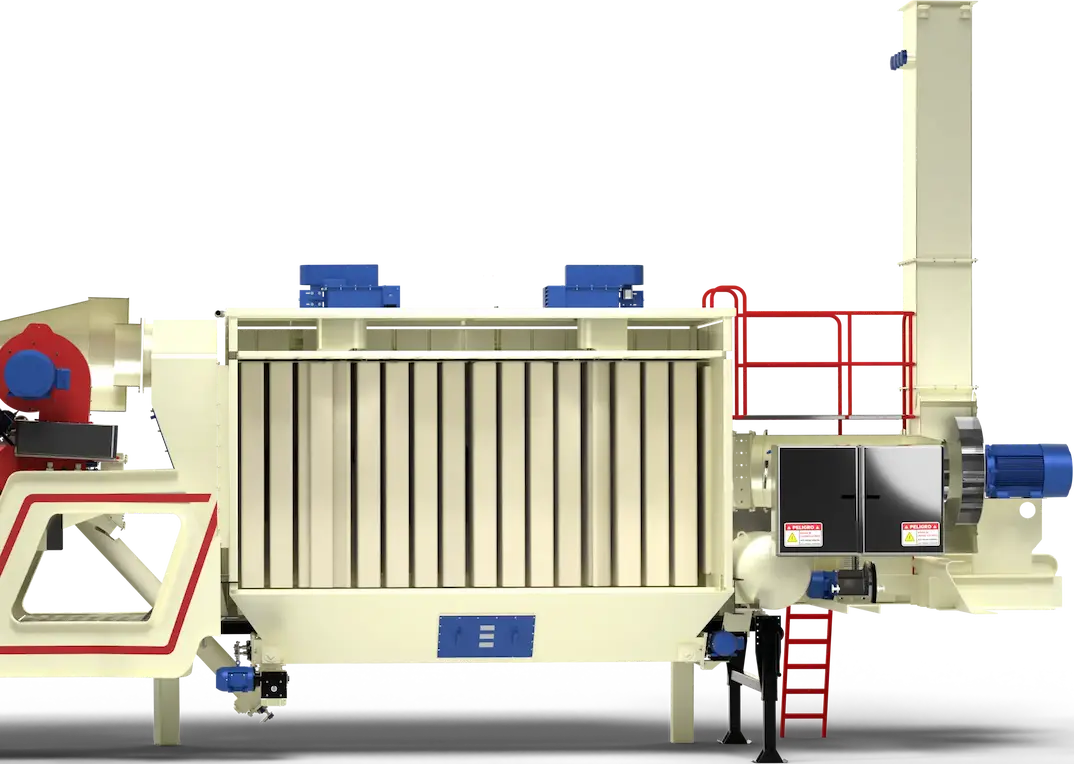
Self-contained and mounted integrated dust control systems designed for efficient air filtration and particulate capture in asphalt plants — configurable for both portable and stationary installations.
Your best business begins with us
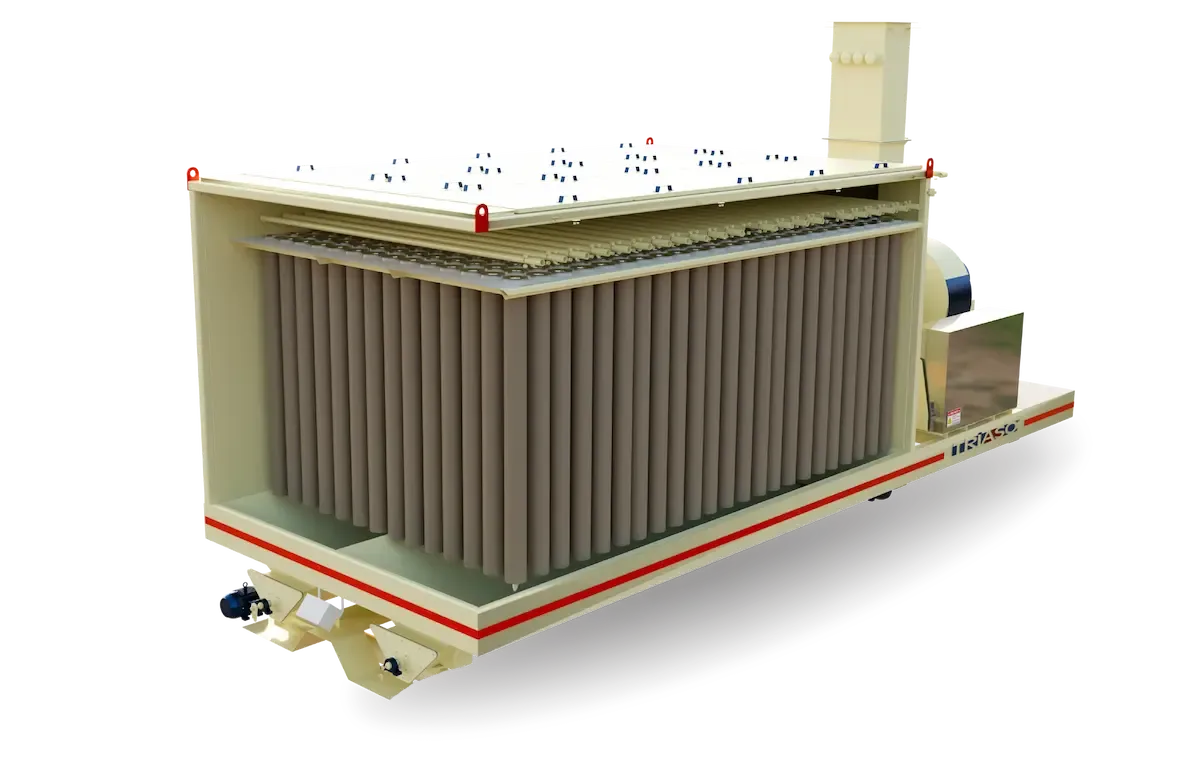
Continuous cleaning system
A continuous cleaning system that keeps the filter bags in operation at all times. Bursts of compressed air are released through a super sonic nozzle, creating a pressure wave that rapidly expands each bag and dislodges the dust cake from its surface. The released particles fall into the hopper below, ensuring uninterrupted filtration and optimal bag performance.
Triaso Control System
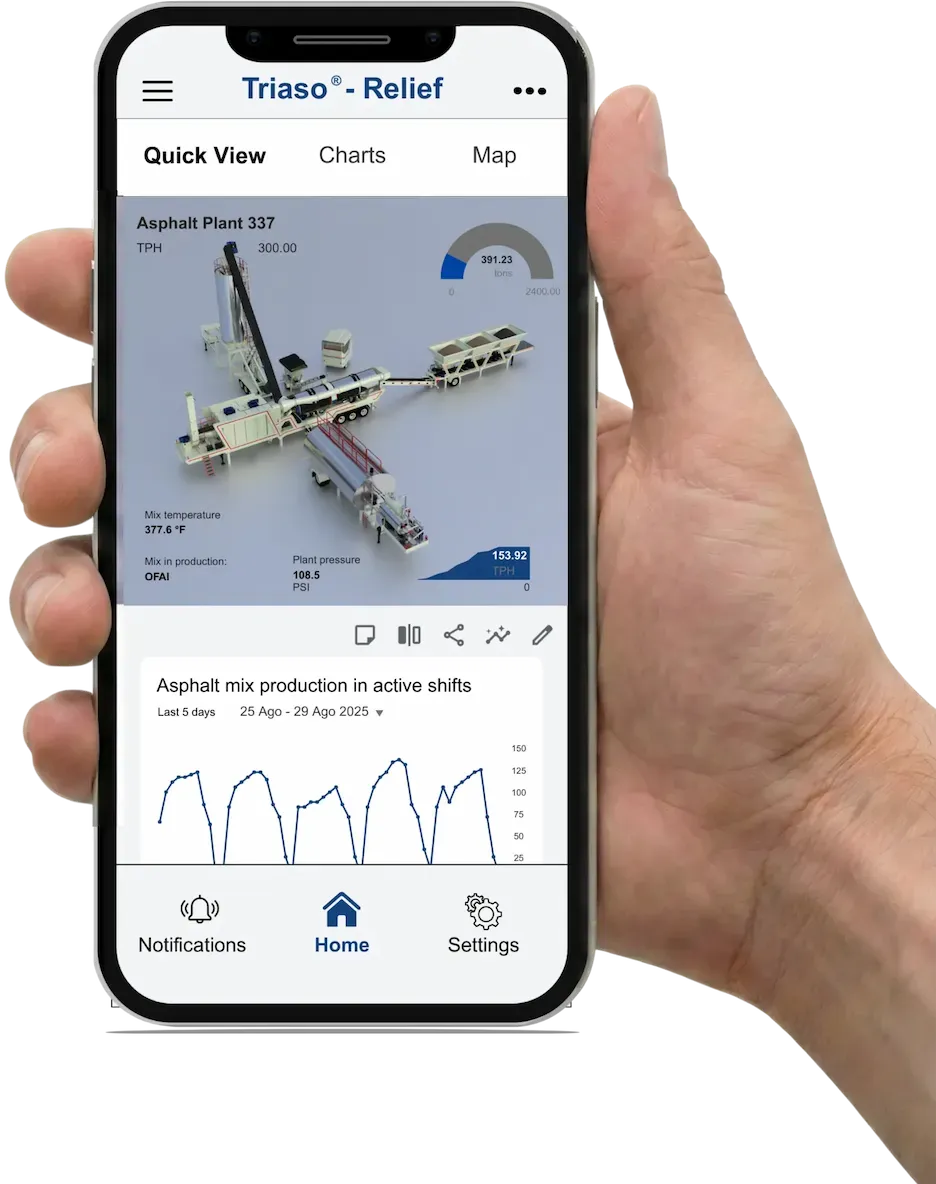
Offering a practical and efficient way to manage industrial equipment operations. With advanced monitoring and automation, it simplifies the Asphalt Plant operation and personnel. Control of key processes like temperature, material dosing, and production rates.
Cloud historical reports
Artificial Intelligence
Fewer operators full control
Remote cloud monitoring
Options to Meet Any Need
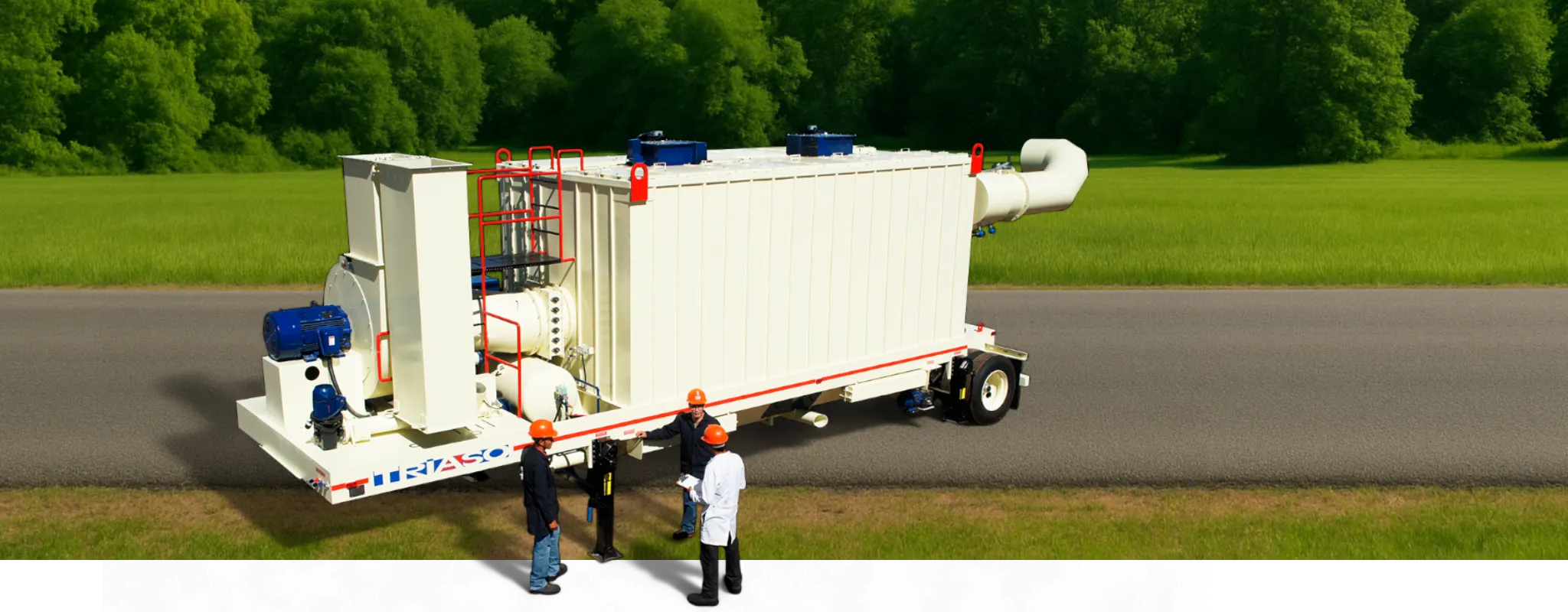
Manufacturing highly portable self-contained, and integrated models, Triaso® baghouses operate at an air-to-cloth ratio as high as 8:1.

Different Types of Filter Bags and Their Specific Applications:
- Polyester
- Nomex
- Polyamide (P84)
Mechanism of baghouses available in pulse jet and reverse jet
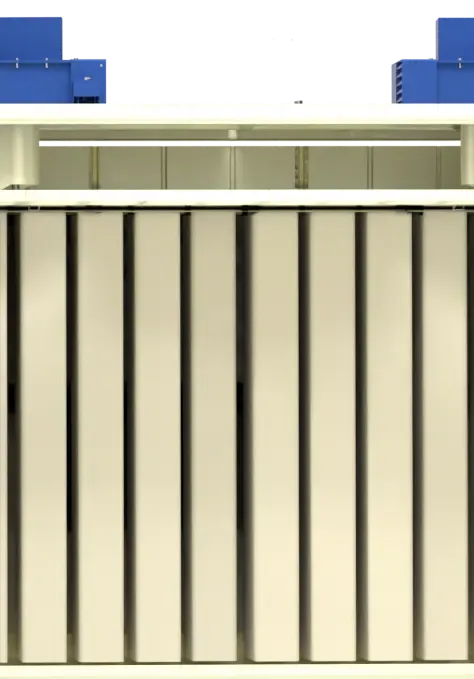
Reverse Air
A cleaning system that directs low-pressure air in the opposite direction to remove dust from the filter bags, typically used in larger baghouses or high-dust applications.
Pulse Jet
A cleaning system that uses short bursts of compressed air to dislodge dust and debris from the filter bags, maintaining continuous airflow and filtration efficiency.
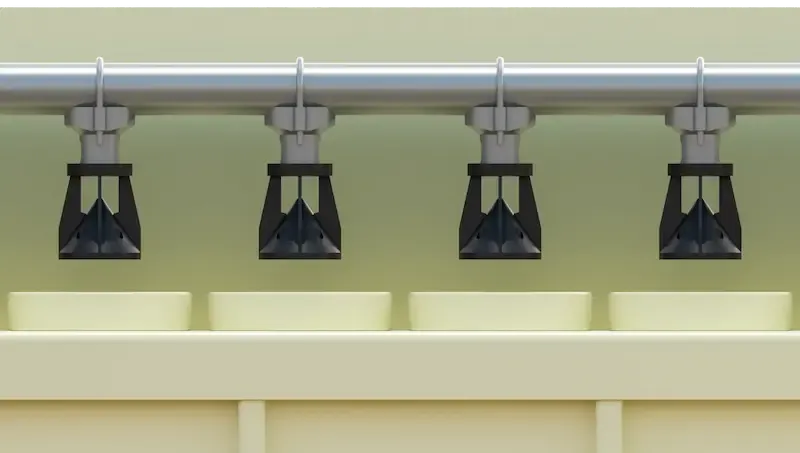
Triaso Supersonic Nozzle
Our supersonic nozzles are 3D printed in-house using carbon alloy materials for exceptional resistance to impacts, high temperatures, and vibrations. Ensuring highly efficient fine particle collection in the baghouse.
Typical Venturi System
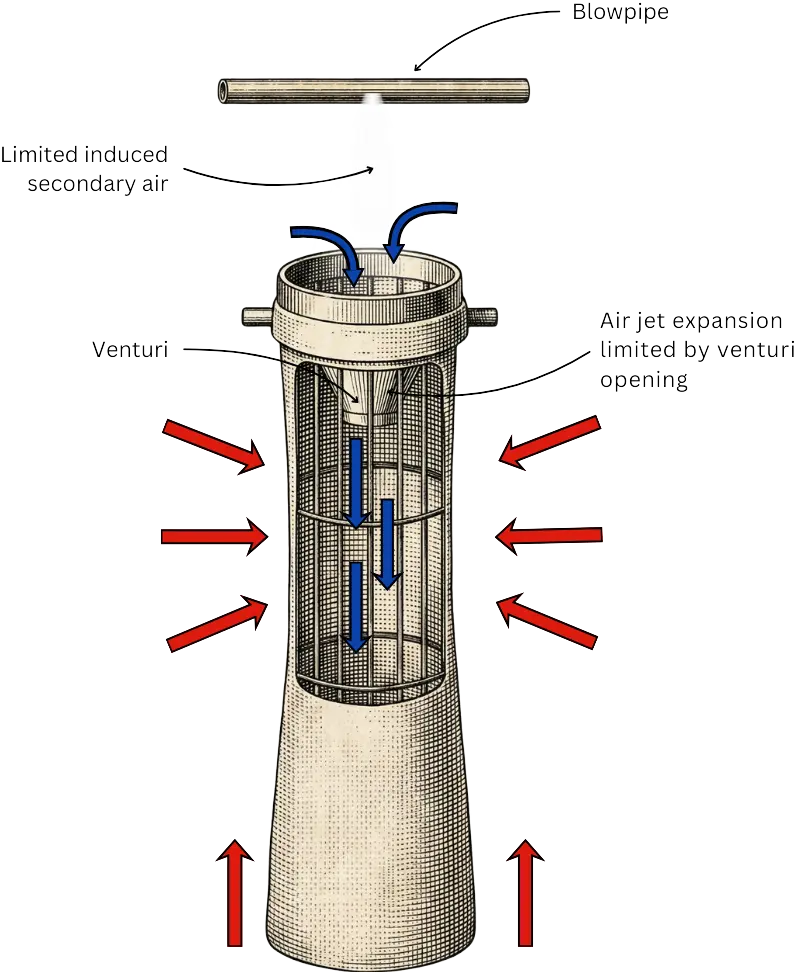
In venturi-based filtration systems, the airflow design introduces multiple inefficiencies that affect both dust collection and system durability. The high-speed airflow exiting the venturi creates a low-pressure zone at the upper section of the filter bag, pulling dust toward that area. This causes uneven accumulation and reduces filtration capacity. Over time, fine particles become embedded deep within the fabric, making cleaning less effective.
Another issue is the placement of the cleaning air pulse near the bag opening. This location limits its ability to draw in additional air that could improve dust removal. Meanwhile, the narrow venturi forces filtered air to accelerate rapidly into the plenum, creating upward airflow that resists the cleaning pulse. As a result, stronger air blasts are needed, increasing energy use and putting mechanical stress on the bags—leading to faster wear and reduced lifespan.
Triaso High Ratio System
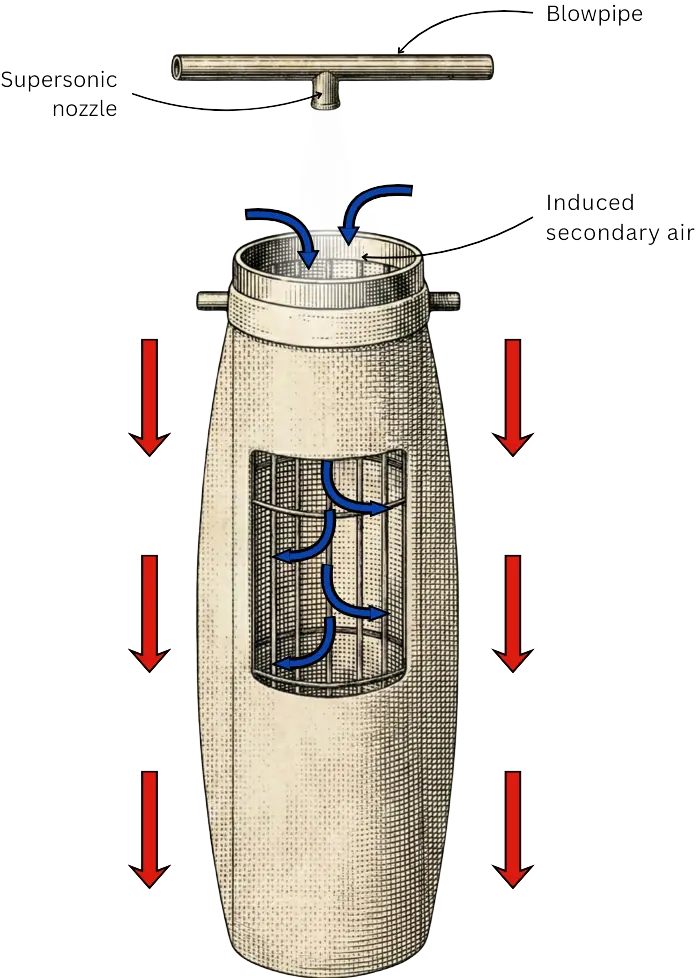
The new series baghouse improves dust removal by completely redesigning the airflow process. Instead of relying on a traditional venturi system, it uses a supersonic converging-diverging nozzle to generate the cleaning air jet. This shift in design allows for the induction of more secondary air, enhancing the cleaning efficiency. The removal of the venturi also reduces the throat velocity at the bag’s inlet, preventing the negative pressure that typically leads to dust buildup at the top of the filter bag.
By fully utilizing the bag mouth, the cleaning air jet expands evenly, minimizing the likelihood of dust cake blowout. Leading to a more uniform bag inflation, resulting in a more effective cleaning cycle and reduced wear on the fabric. As a result, the Triaso Model only requires half the filter area compared to traditional venturi systems, enabling Triaso to offer high performance in a more compact form.
Total and homogeneous return of fines to the asphalt mix to optimize its quality and pavement life.
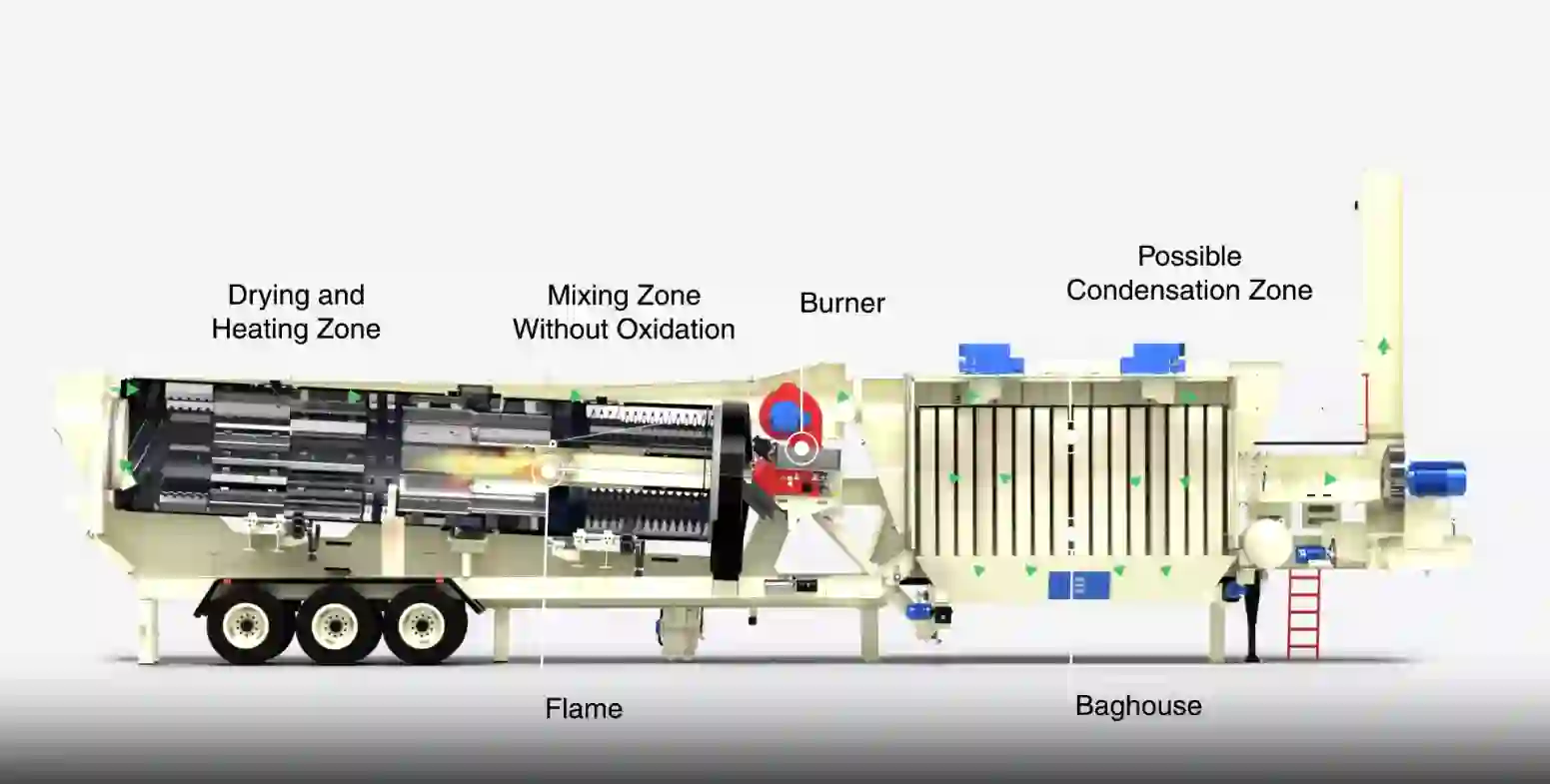
After passing through the primary dust collector, the gas stream enters the baghouse inlet chamber. As it slows down, it flows beneath a protective barrier that shields the filter bags. in the clean air plenum draws the gas upward through the bags, causing fine particles to accumulate on their outer surface while the cleaned air moves into the plenum and exits through the exhaust stack.
Triaso Exhaust System
Gas extractor with curved blade fan, more efficient and quieter.
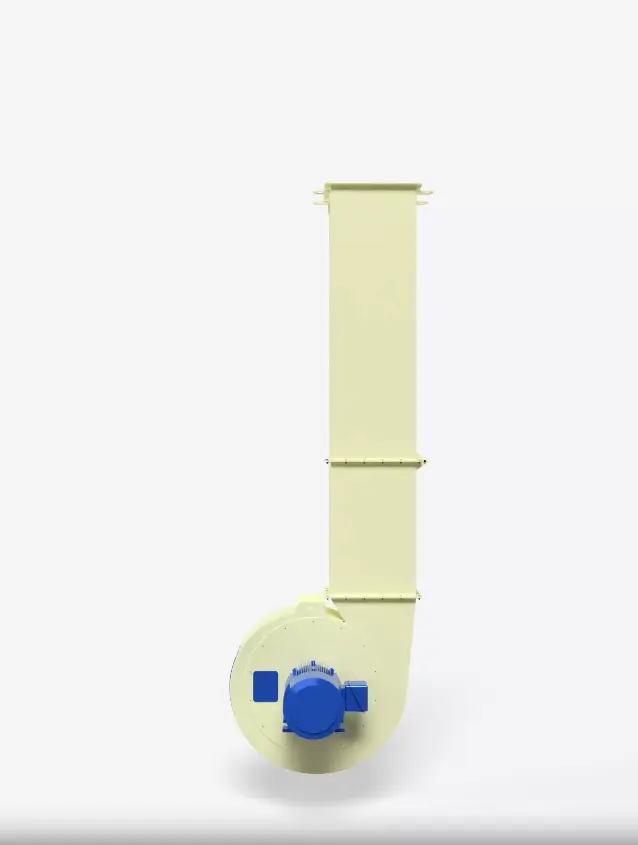
The Triaso® Extractor is designed to effectively manage airflow and ensure optimal gas filtration in the asphalt plant. With its curved blade fan, the extractor pulls gases through the system while maintaining efficient air circulation.
It operates using centrifugal force to separate dust from exhaust gases. As the gas enters, it spirals along the inner walls, where heavier particles are pushed outward. Approximately 70% of the total dust load falls to the bottom for collection, reducing the burden on the baghouse filters, improving efficiency, and extending their service life.
The finer dust particles are directed into the baghouse through a strategically placed high side inlet. This ensures horizontal and downward airflow, preventing fine dust from being re-entrained into the system. A knockout chamber decelerates airflow, allowing more material to drop into the hopper, while internal baffles ensure even air distribution and protect the bags from abrasion.
This design optimizes air quality, enhances filtration efficiency, and minimizes maintenance requirements, ensuring a more effective and reliable operation.
Damper
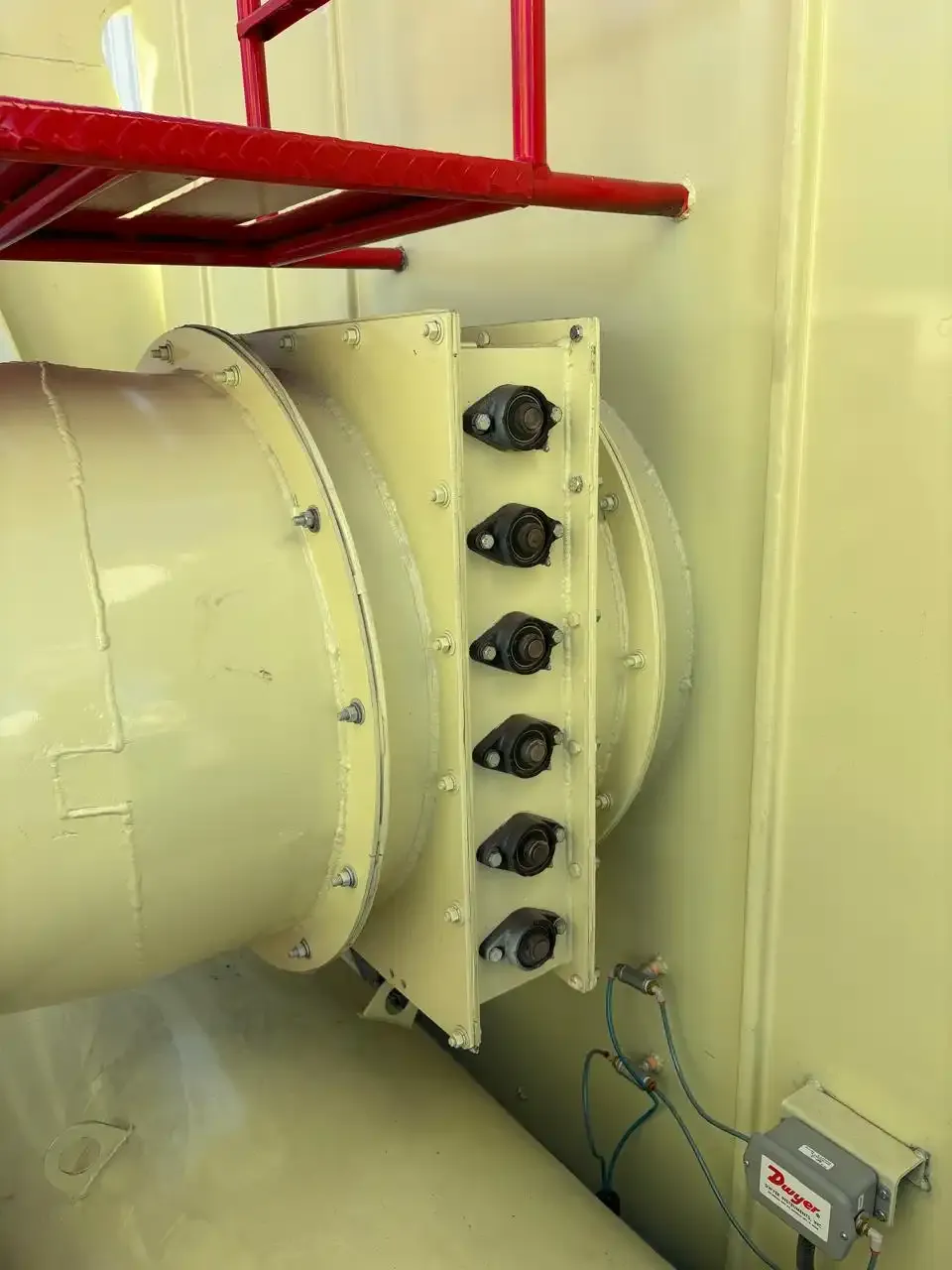
The damper consists of a series of bars that, when fully closed, form a shutter acting as a barrier for the exhaust gases from the baghouse.
The damper is electrically operated to regulate the flow of dust-free exhaust gases from the asphalt plant. It can be controlled manually from the control cabin or automatically by pressure-differential sensors inside the baghouse, maintaining the system within a safe operating pressure range.
Baghouses Fines Hoppers
Fine dust particles enter the baghouse through a high side
inlet designed for controlled horizontal and downward
airflow. This configuration prevents re-entrainment of
fine material. A knockout chamber slows the airflow,
allowing heavier particles to settle in the hopper, while
internal baffles distribute air evenly and protect the
filter bags from abrasion.
This design improves air quality, increases filtration efficiency,
and reduces maintenance, ensuring reliable and consistent performance.
Fine dust particles enter the baghouse through a high side
inlet designed for controlled horizontal and downward
airflow. This configuration prevents re-entrainment of
fine material. A knockout chamber slows the airflow,
allowing heavier particles to settle in the hopper, while
internal baffles distribute air evenly and protect the
filter bags from abrasion.
This design improves air quality, increases filtration efficiency,
and reduces maintenance, ensuring reliable and consistent performance.
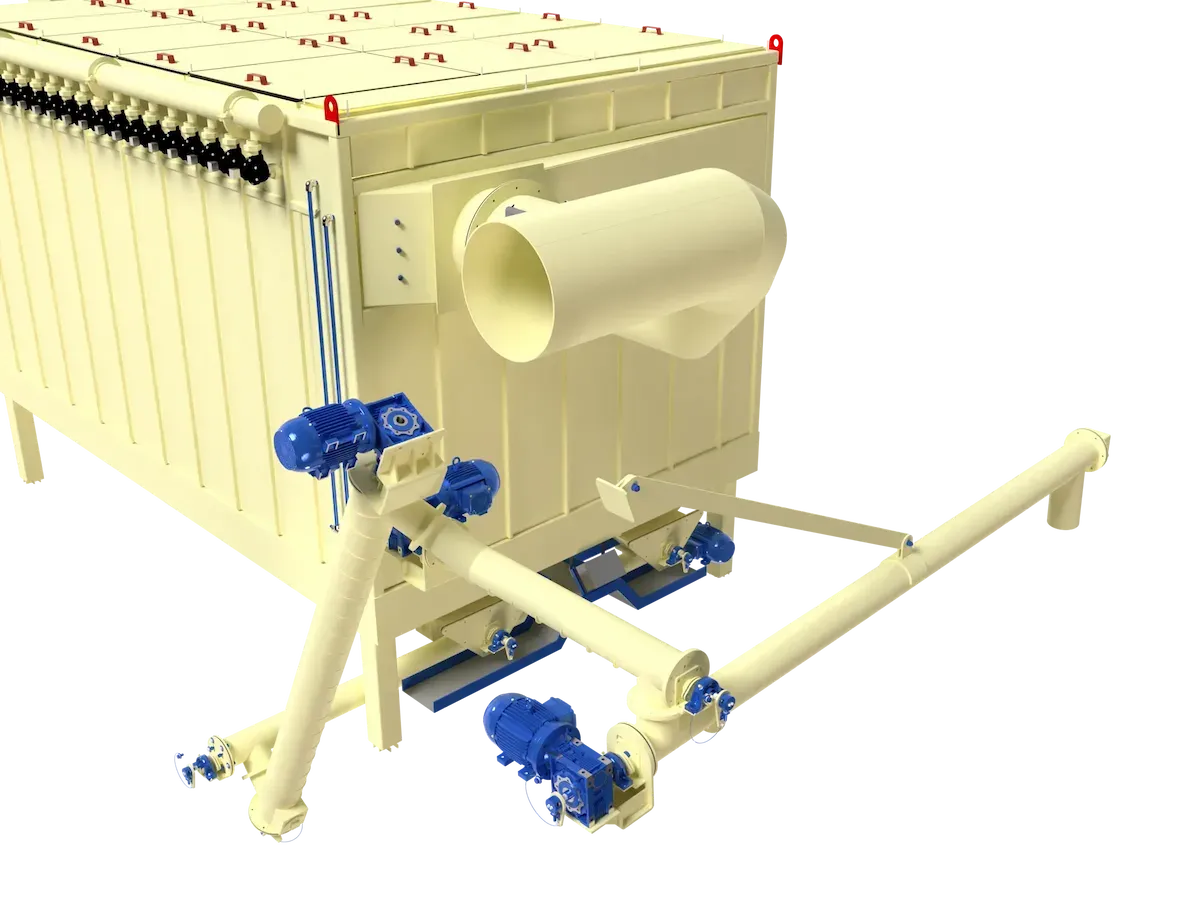
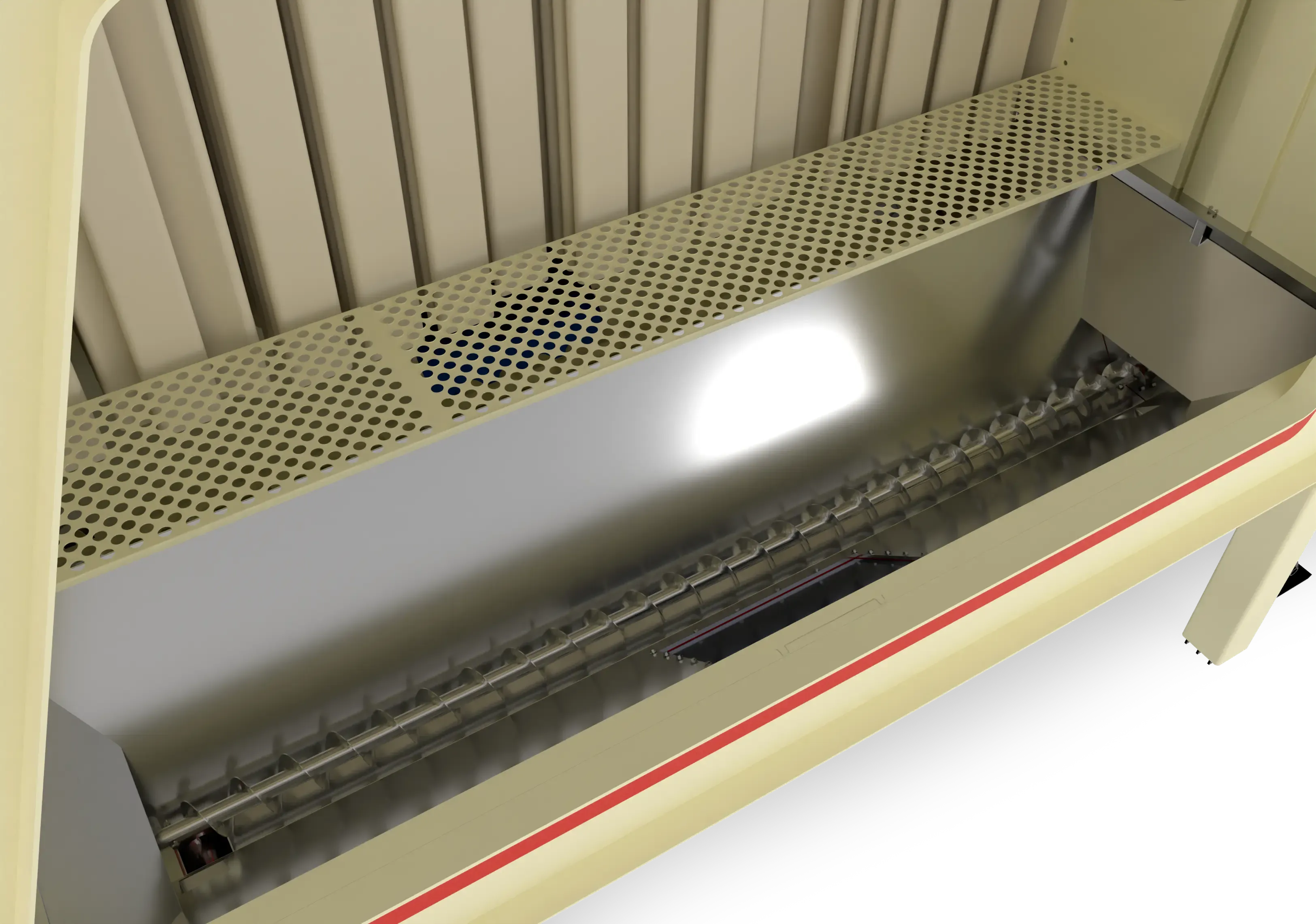
Positioned directly below the filter system, these hoppers allow for controlled collection of fines, which can then be temporarily stored, discharged, or reintegrated into the asphalt mix—depending on the plant’s configuration. They play a crucial role in maintaining clean air emissions and supporting the environmental performance of the asphalt plant.
After the baghouse collects fine particles in the hoppers, a screw conveyor transfers them back to the drum mixer. The return point is precisely timed and located at the liquid asphalt injection zone, ensuring the fines are immediately coated and fully incorporated into the hot-mix.
By reintegrating the fines at this specific point, the system prevents them from becoming airborne again, reduces material loss, and improves the quality and durability of the asphalt. This efficient recovery not only enhances environmental performance but also maximizes resource use for a more cost-effective operation.
Fines Return System
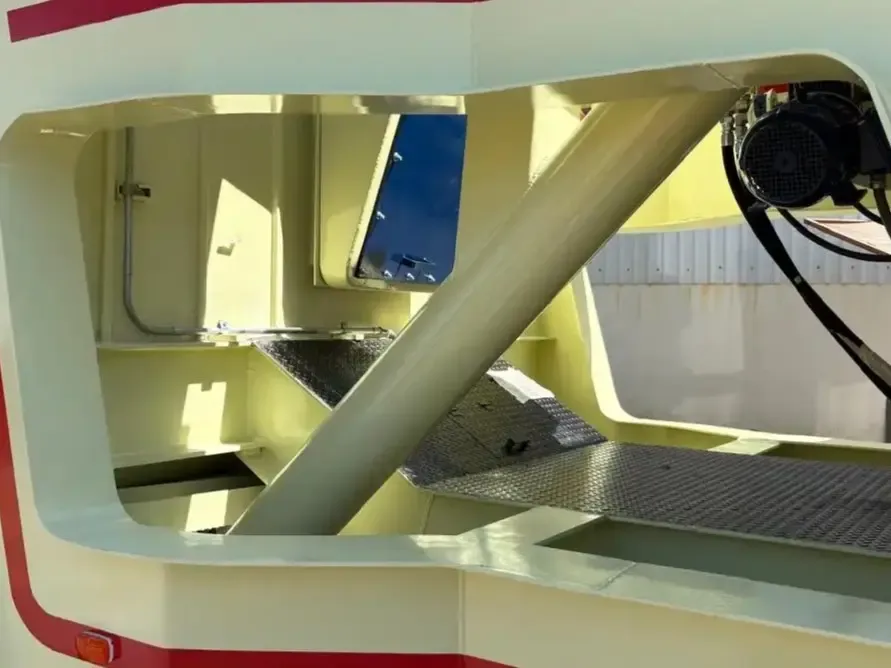
Triaso
Baghouses
Features
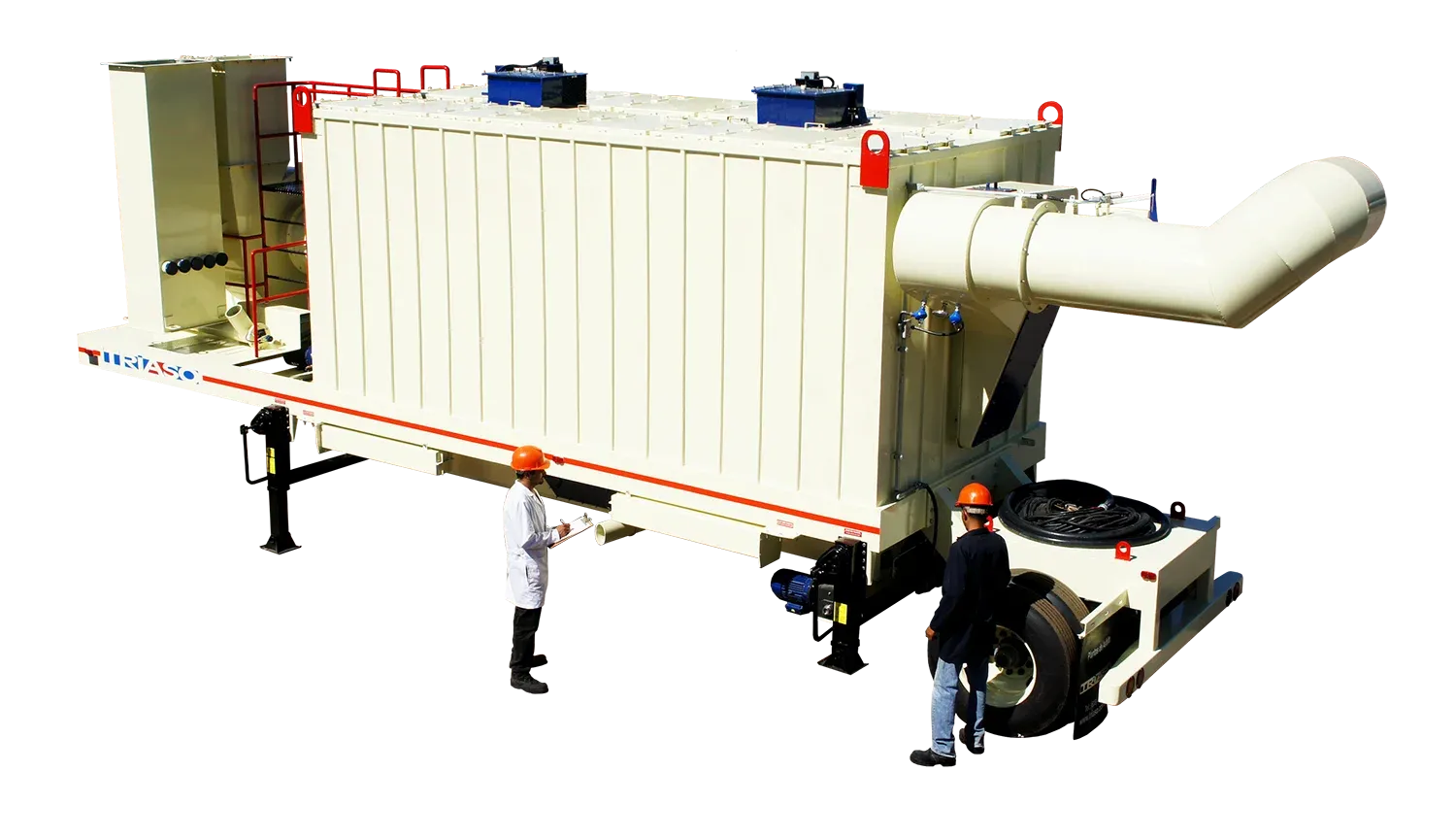
- Modular and fast-to-install design.
- Top-access snapband bags for easy maintenance.
- Reinforced housings and galvanized wire cages with built-in supersonic nozzles.
- Wide bag spacing for optimal airflow and minimal wear.
- Custom ducting and pre-installed air systems.
- Integrated screw conveyor for fines handling.
- Available in configurations up to 90,000 ACFM.
- Tool-free access to service components.
Self-contained Baghouse of 24,000 Acfm, Pulse Jet
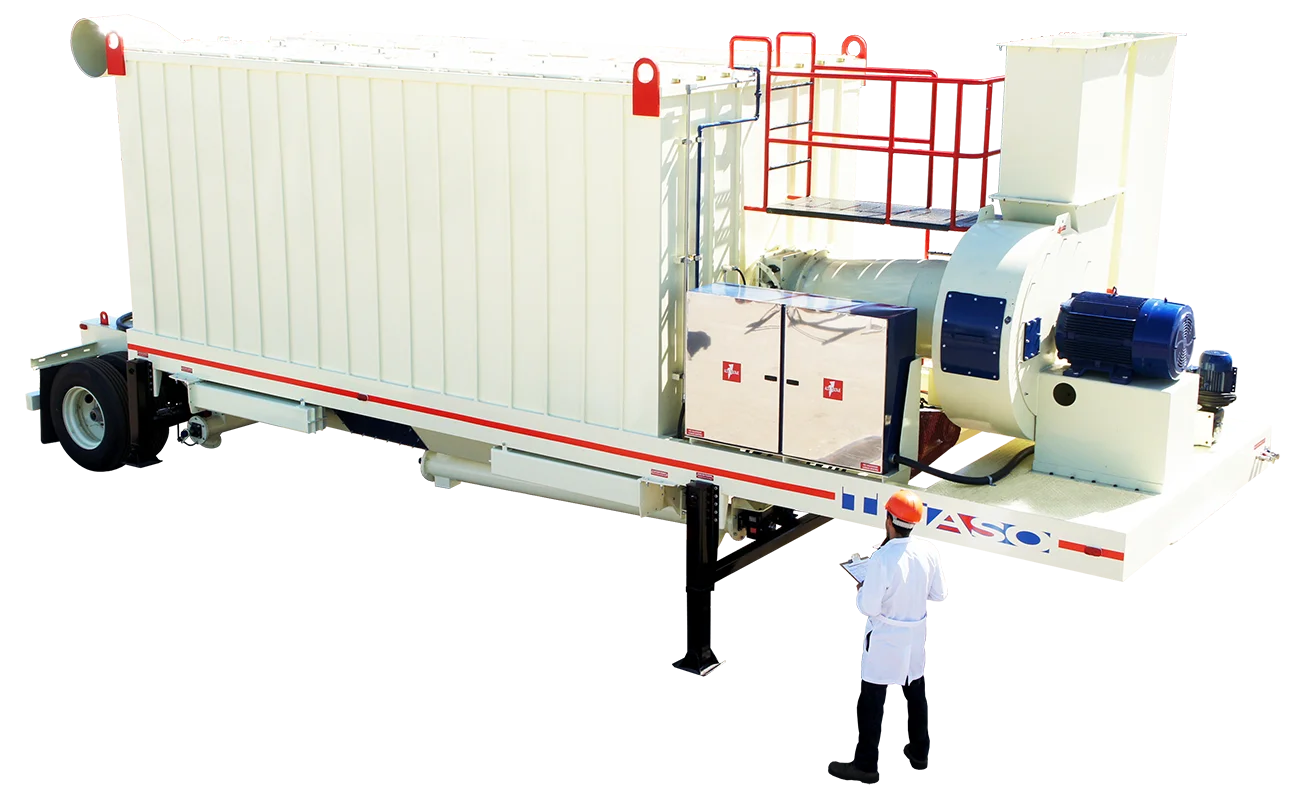
Industrial aesthetics elevate the visual appeal of your operation.
MANUFACTURE
We manufacture directly without subcontractors, ensuring that every part meets our strict quality standards.
SPARE PARTS
Triaso spare parts are precisely designed to ensure optimal performance, extending both the lifespan of the part and the overall equipment.
CUSTOM DESIGN
In addition to our standardized designs, we specialize in providing customized solutions tailored to meet the specific needs of our clients.